 TR
TR ES
ES FR
FR AR
AR RU
RUNewborn Hearing Screening Reference Center
Every step you take to protect your baby's health and support their development is of great importance. One of these steps is the newborn hearing screening, performed to evaluate your baby's hearing health.
As Biruni University Faculty of Medicine Hospital Hearing Screening Reference Center, we perform advanced hearing screenings for infants using high‑technology devices.
What is a Newborn Hearing Screening Reference Center?
Newborn hearing screening is a quick and painless test performed from birth to evaluate babies' hearing abilities. When not diagnosed early, hearing loss can negatively affect language and speech development. Therefore, it is crucial that babies undergo hearing screening in their first months of life.
A Newborn Hearing Screening Reference Center, on the other hand, is a specialized center with Ear, Nose, and Throat (ENT) specialists and audiologists, equipped with the necessary advanced diagnostic and treatment facilities. Infants who do not pass tests such as OAE and ABR are referred to reference centers for further evaluation.
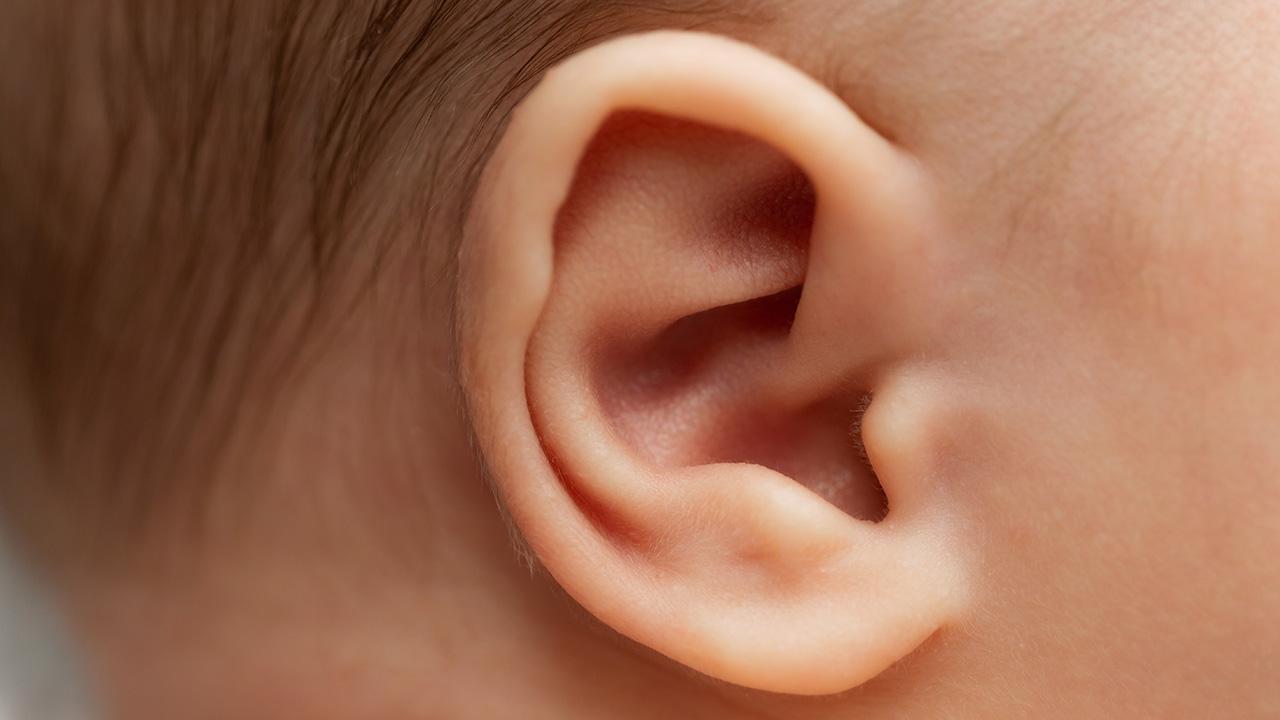
The Importance of Hearing Screening in Newborns
Babies learn to speak by listening to and imitating sounds in their environment. Hearing the sounds specific to their native language, especially, is critical for speech to develop correctly and on time.
Babies with hearing loss cannot adequately hear these sounds, which may cause delays and distortions in speech development. Therefore, it is essential to determine whether your baby's hearing ability is healthy from the moment they are born.
Thanks to newborn hearing screening, potential hearing losses in babies can be detected very early, ideally within the first 3 months. It is possible for babies whose hearing loss is diagnosed early and who start appropriate treatment and rehabilitation programs by no later than 6 months of age to develop language and speech skills similar to their peers.
How Can You Tell if Your Baby Has Hearing Loss?
Although newborn hearing screening is the most reliable method for early detection of hearing loss, it is also important to watch for certain signs during your baby's development.
What to Look for in the Newborn Period
In the first months, you can get an idea about your baby's hearing ability by paying attention to these points:
- Not turning their head toward your voice.
- Never calming down with your voice.
- Showing no reaction to unexpected loud sounds.
- Not showing any startle response to sudden loud noises.
Signs That May Appear as the Baby Grows
As your baby gets older, other signs of hearing loss may become apparent:
- Not pointing to familiar people or objects when asked at 6‑12 months of age.
- Not making speech sounds or decreasing vocalizations at 6‑12 months.
- Not understanding simple words like "wave" or "clap" by hearing alone at 12 months, but responding when accompanied by gestures.
- Starting to speak later than expected, delays in saying first words, or speech being difficult to understand.
- Turning up the volume of the television or music higher than other family members.
- Not always responding when called, especially from another room.
- Appearing to focus more on vibrating sounds than other types of sounds.
- In some cases, experiencing balance and coordination problems.
If you notice any of these signs in your baby, it is important to consult a healthcare professional without delay.
What Are Newborn Hearing Screening Tests?
Newborn hearing screening is usually performed before the baby is discharged from the hospital. It is carried out using two basic methods: the Otoacoustic Emissions (OAE) test and the Auditory Brainstem Response (ABR) test.
Otoacoustic Emissions (OAE) Test
The OAE test measures the response of the outer hair cells in the inner ear to sounds. During the test, a small, soft‑tipped probe is placed in the baby's ear canal, and gentle clicking sounds are sent through the probe. If the baby's hearing is normal, the inner ear cells respond to these sounds, and the responses are recorded by the device.
Auditory Brainstem Response (ABR) Test
The ABR test measures the electrical responses of the brainstem to sound stimuli. In this test, small electrodes are placed on the baby's head and ears, and gentle clicking sounds are delivered through earphones. The electrodes record the electrical activity of the brainstem in response to sounds. The ABR test provides more precise information than OAE in determining the presence and approximate degree of hearing loss.

In Which Cases Should You Refer to a Newborn Hearing Screening Reference Center?
Newborn hearing screening results are usually evaluated as "pass" or "refer." If your baby's screening result is "refer," there is no need to worry immediately. A "refer" result indicates that the baby did not pass the hearing screening, but it is not a confirmed diagnosis of hearing loss.
Screening tests can sometimes give false results due to various reasons, such as residual fluid in the ear canal, earwax, or the baby moving during the test. Therefore, babies with a "refer" result need to be referred to a "reference center" for advanced diagnosis and evaluation.
Reference centers are specialized diagnostic and treatment centers with ENT specialists and audiologists, equipped with the necessary infrastructure for newborn hearing screening. Babies who do not pass the screening test undergo more comprehensive audiological assessments at these centers.
The Process at the Newborn Hearing Screening Reference Center
Babies referred to a reference center will first be evaluated by an ENT specialist. Then, more detailed hearing tests will be performed by audiologists.
Based on the test results, it will be determined whether your baby has hearing loss and, if so, its degree. If hearing loss is detected, early intervention programs such as hearing aids or cochlear implants may be recommended.
Where is the Newborn Hearing Screening Reference Center Located?
For new parents living in Istanbul, there are many Ministry of Health‑approved reference centers where you can have your baby's hearing screening performed. Biruni University Faculty of Medicine Hospital Newborn Hearing Screening Reference Center is one of these centers. We are at your service with our innovative methods and academic physician staff.