 TR
 ES
 FR
 AR
 RU
Do Not Underestimate Changes in Moles: An Early Warning Guide for Your Skin Health
Although moles on the skin are often considered harmless, certain changes may be early signs of significant health issues. For this reason, regularly monitoring moles and seeking expert evaluation in unusual cases is of great importance.
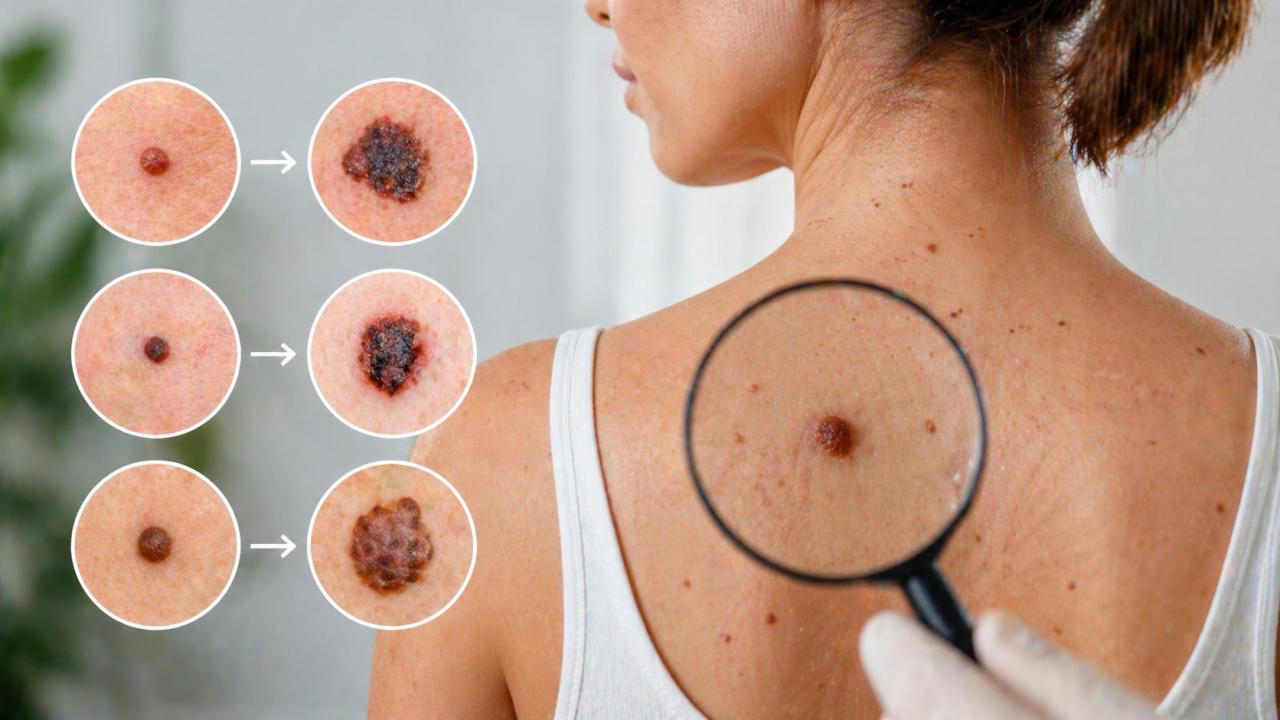
What Is a Mole and Why Does It Form?
Moles, medically known as melanocytic nevi, are structures that form as a result of the proliferation of pigment producing cells in the skin. They may be present at birth or can appear later in life. An increase in the number of moles is especially common during childhood and adolescence.
Having between 10 and 40 moles is considered normal for an average adult. However, having a high number of moles or a family history of skin cancer are considered risk factors.
Which Changes Signal Risk?
The most important aspect of moles is the changes that occur over time. In particular, the following should be carefully monitored:
- Change in shape
- Variation in color tones
- Increase in size
- Irregular borders
Such changes may be warning signs for skin cancer and require dermatological evaluation.
Check Yourself with the ABCDE Rule
One of the most commonly used methods for monitoring moles is the ABCDE rule:
- A (Asymmetry): If the two halves do not match
- B (Border): If the edges are irregular
- C (Color): If it contains multiple color tones
- D (Diameter): If it is larger than 6 mm
- E (Evolution): If it changes over time
If even one of these criteria is present, it is recommended to consult a specialist without delay.
Do Not Delay If You Notice These Signs
Some findings require more urgent evaluation:
- Bleeding
- Itching
- Sudden growth
- Redness around the mole
- Rapid change in shape or color
These signs should not be ignored, and a dermatology specialist should be consulted without delay.
Share on Social Media
The development of this content was contributed by the Biruni University Hospital Board. The content of the page is for informational purposes only. The page content does not include elements intended for therapeutic health services. For diagnosis and treatment, please consult your physician.