 TR
TR ES
ES FR
FR AR
AR RU
RUCould CAR T Cell Therapy Open New Possibilities for Pancreatic Cancer Treatment?
As the search for more effective and targeted treatments for pancreatic cancer continues, CAR T cell therapy, which harnesses the immune system to recognize and attack cancer cells, has emerged as one of the most promising approaches under investigation.
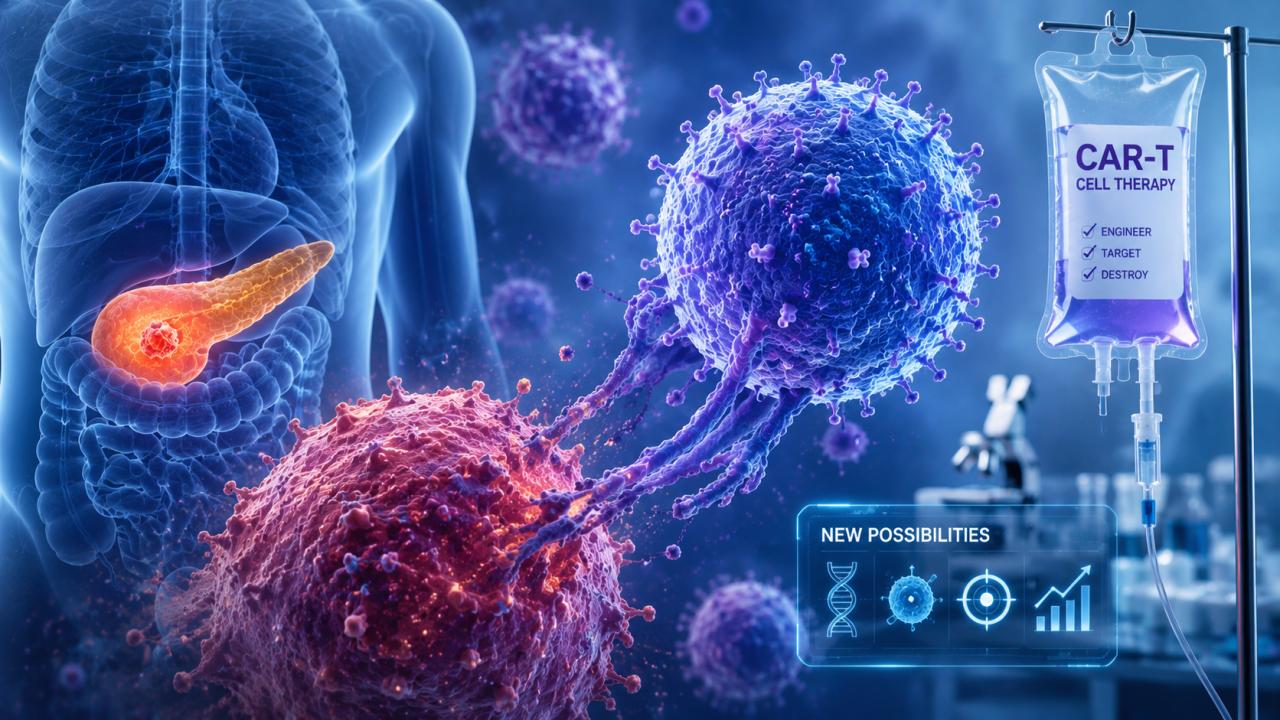
Pancreatic cancer often presents with symptoms only at an advanced stage, making diagnosis and treatment particularly challenging. Despite current treatment options, it remains a major health concern. Researchers continue to investigate new approaches that may provide additional treatment options, especially for patients with treatment resistant disease.
CAR T cell therapy, which has shown promising results in certain blood cancers, is now being studied to determine whether it can also be effective against solid tumors such as pancreatic cancer. In this treatment, a patient's immune cells are modified in a laboratory to better recognize and target cancer cells.
However, applying CAR T therapy in pancreatic cancer is more challenging than in blood cancers. The dense tissue surrounding pancreatic tumors can make it difficult for immune cells to reach the tumor. In addition, the tumor microenvironment can suppress the immune system, reducing the effectiveness of the treatment cells.
Researchers are focusing on several tumor markers to help CAR T cells target pancreatic cancer more precisely. Mesothelin, HER2, CEA, and Claudin 18.2 are among the markers currently being investigated. Selecting the right target is important for directing the treatment toward cancer cells while reducing the risk of damage to healthy tissues.
Scientists are also developing next generation CAR T cell designs to improve the effectiveness of this therapy in pancreatic cancer. Combining CAR T therapy with chemotherapy, radiotherapy, immunotherapy, and other emerging treatment approaches is also being explored.
According to experts, CAR T cell therapy is not yet a standard treatment for pancreatic cancer. However, ongoing research suggests that it may become a promising option in the future, particularly for patients with limited treatment alternatives. Larger clinical studies are still needed to better establish its safety and effectiveness.
Share on Social Media
The development of this content was contributed by the Biruni University Hospital Board. The content of the page is for informational purposes only. The page content does not include elements intended for therapeutic health services. For diagnosis and treatment, please consult your physician.