 TR
 ES
 FR
 AR
 RU
What Is Autism? Symptoms, Early Diagnosis, and Advice for Families
Autism, or Autism Spectrum Disorder (ASD), is a neurodevelopmental condition characterized by differences in social communication, language development, and behavior. It typically appears in the early years of life and can present with varying signs in each individual. The term “spectrum” reflects that the symptoms and their severity can differ from person to person.
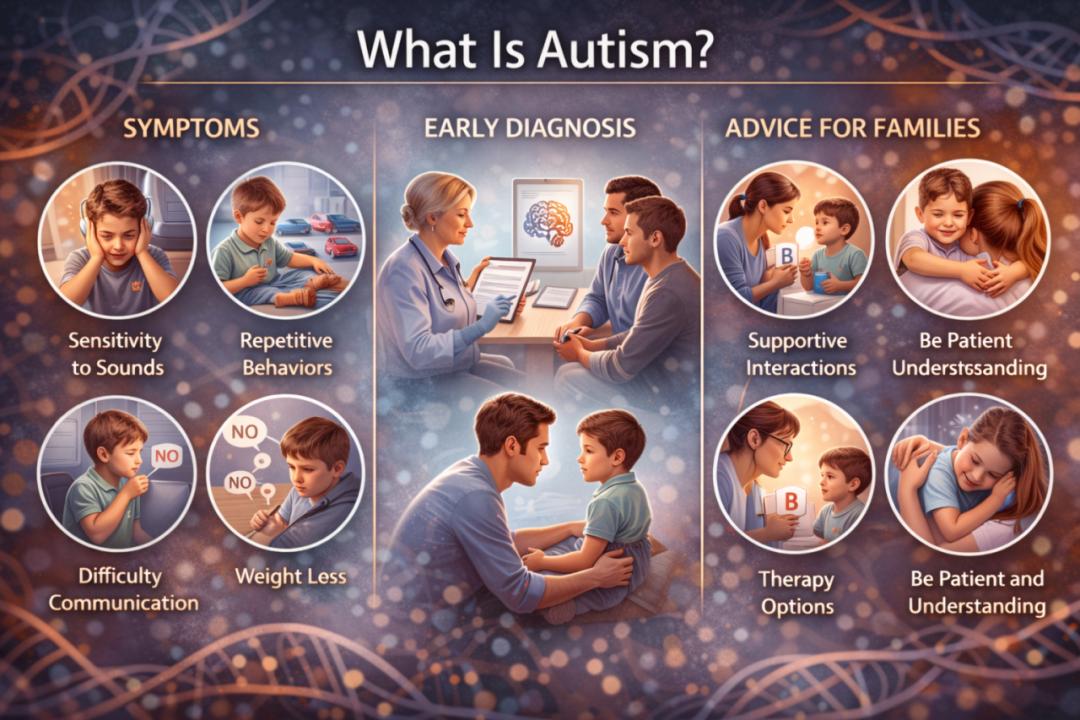
What Is Autism?
According to experts, autism is not a disease but a developmental difference. With early diagnosis and appropriate educational support, individuals with autism can develop life skills and actively participate in society.
Most Common Signs of Autism
Autism symptoms are usually noticed in the early years of life. Signs may not appear the same in every child, but the most common ones include:
- Not responding when their name is called
- Difficulty making eye contact
- Difficulty engaging in play with peers
- Delay in speech development
- Repetitive movements such as hand flapping or rocking
- Using toys in unusual ways
- Strong reactions to changes in routine
- Oversensitivity to certain sounds, textures, or light
The presence of one or more of these signs does not necessarily mean autism. However, early evaluation by a specialist is very important.
Why Is Early Diagnosis Important?
Early diagnosis in autism plays a critical role in supporting a child’s developmental potential. Early education and therapy programs, in particular, make a significant contribution to improving social communication skills and gaining daily life skills.
Research shows that early intervention programs:
- Support language development
- Increase social communication
- Can reduce behavioral problems
- Facilitate adaptation to school and social life
For this reason, it is recommended that families recognize developmental differences early and seek professional support.
What Causes Autism?
There is no single known cause of autism. Scientific studies indicate that both genetic predisposition and environmental factors may play a role in the development of autism spectrum disorder.
Current research suggests that:
- Genetic factors play a significant role
- Certain differences in brain development may be involved
- Some factors related to pregnancy and birth may increase risk
However, research on the causes of autism is still ongoing.
How Should Children with Autism Be Supported?
A patient, understanding, and supportive approach is essential in supporting the development of children with autism. Experts offer the following recommendations to families:
- Try to communicate with your child by making eye contact
- Keep daily routines as consistent as possible
- Use simple and clear language
- Encourage communication through play
- Participate regularly in educational programs recommended by specialists
Focus on discovering your child’s strengths
A conscious and supportive approach from families can make a significant difference in a child’s developmental journey.
Why Is Social Awareness Important?
Autism is an issue that concerns not only individuals and their families but also society as a whole. As social awareness increases, it becomes possible for individuals with autism to receive greater support in education, social life, and employment.
Share on Social Media
The development of this content was contributed by the Biruni University Hospital Board. The content of the page is for informational purposes only. The page content does not include elements intended for therapeutic health services. For diagnosis and treatment, please consult your physician.